Protecting Biodiversity in Kildare: From Our Hedgerows to Our Local Streams
On Saturday, 17 October, I attended the Kildare Biodiversity Conference, hosted by Kildare Wildlife Rescue and Kildare County Council (KCC).
The conference looked at how we can protect our native wildlife and the many threats it faces, from farming practices and water pollution to habitat loss and climate change. It was an opportunity to hear from people working in different areas of conservation and to think about what we can do, both locally and as a wider community, to protect the natural world around us.
Protecting our hedgerows
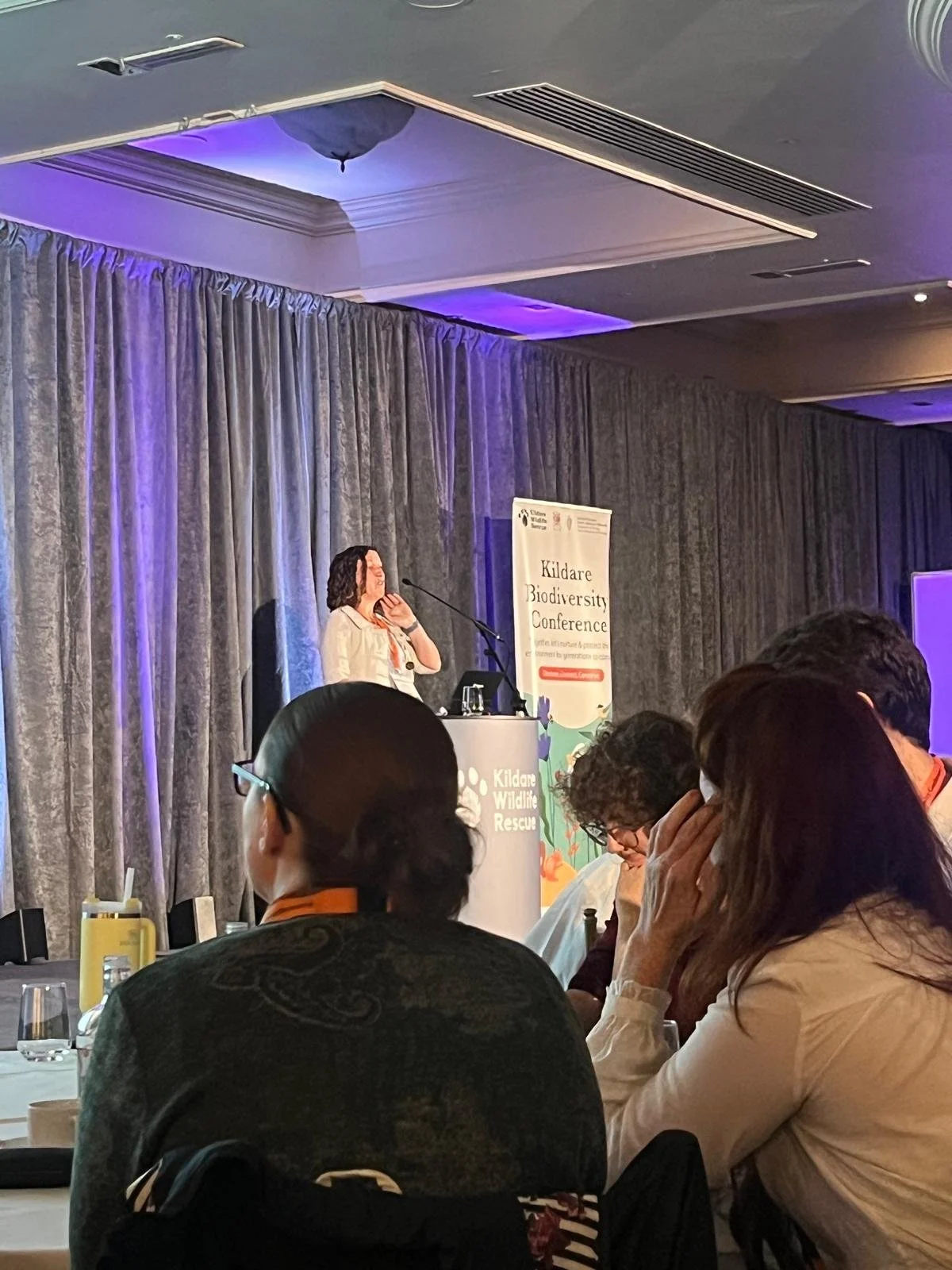
Dr Méabh Boylan, Biodiversity Officer with Kildare County Council, presented the Kildare Biodiversity Action Plan 2026–2031. The plan sets out measures to protect and restore nature across the county, including habitat restoration, wildlife conservation and greater community involvement.
It’s important to recognise the good work being done through Kildare’s Biodiversity Action Plan and the efforts of Méabh Boylan and others to put biodiversity firmly on the agenda. There are some really positive ideas in the plan, particularly around restoring habitats, protecting wildlife and encouraging local communities to get involved. It’s encouraging to see nature being given this attention, and hopefully the plan will help turn that good work into real, lasting benefits for the wildlife and natural places we have here in Kildare. There is plenty to build on, and recognising what’s being done well is just as important as asking where more can be done.
However, one aspect caught my attention: the proposed grading of hedgerows under Action 4.5. While I understand the value of assessing hedgerows to identify those most important for wildlife, I am concerned about what could happen to those classified as being of “low value”.
Just because a hedgerow receives a low grade does not mean it has no value. It may provide shelter and nesting places for birds, food for pollinators, a route for wildlife to move between habitats and shade for farm animals. When we lose one hedgerow after another, the overall impact can be much greater than we realise.
My concern is that a low grade could eventually be used to justify removing hedgerows, particularly where development is planned. I would like the plan to make it clear that a low rating is not, in itself, a reason to remove a hedgerow. Wherever possible, existing hedgerows should be retained and protected. Once they are gone, it can take many years for nature to recover what has been lost.
Dr Elaine McGoff, Head of Advocoacy for An Taisce.
Our rivers are part of our community
Dr Elaine McGoff, Head of Advocacy at An Taisce, spoke about the serious problems facing our rivers and other waterways. Her presentation really made me think about how we view the water flowing through our own communities.
One of the ideas she shared was the Māori understanding of the relationship between people and rivers, in which a river is seen as part of one's identity rather than simply a resource to be used. She encouraged us to think about our own local waterways in the same way.
Elaine spoke about the Morrell Stream in Naas and Carnalway in Brannockstown, waterways that are important to her and familiar to many of us locally. It is a simple but powerful idea: our rivers and streams are not somewhere else, or somebody else's responsibility. They are part of where we live, part of our community and part of our natural heritage.
She also made an important point about the role of local communities. While individuals and community groups can do a great deal, we cannot solve the problems facing our waterways on our own. We need action at government level too, with policies, legislation and farming practices that properly protect water quality.
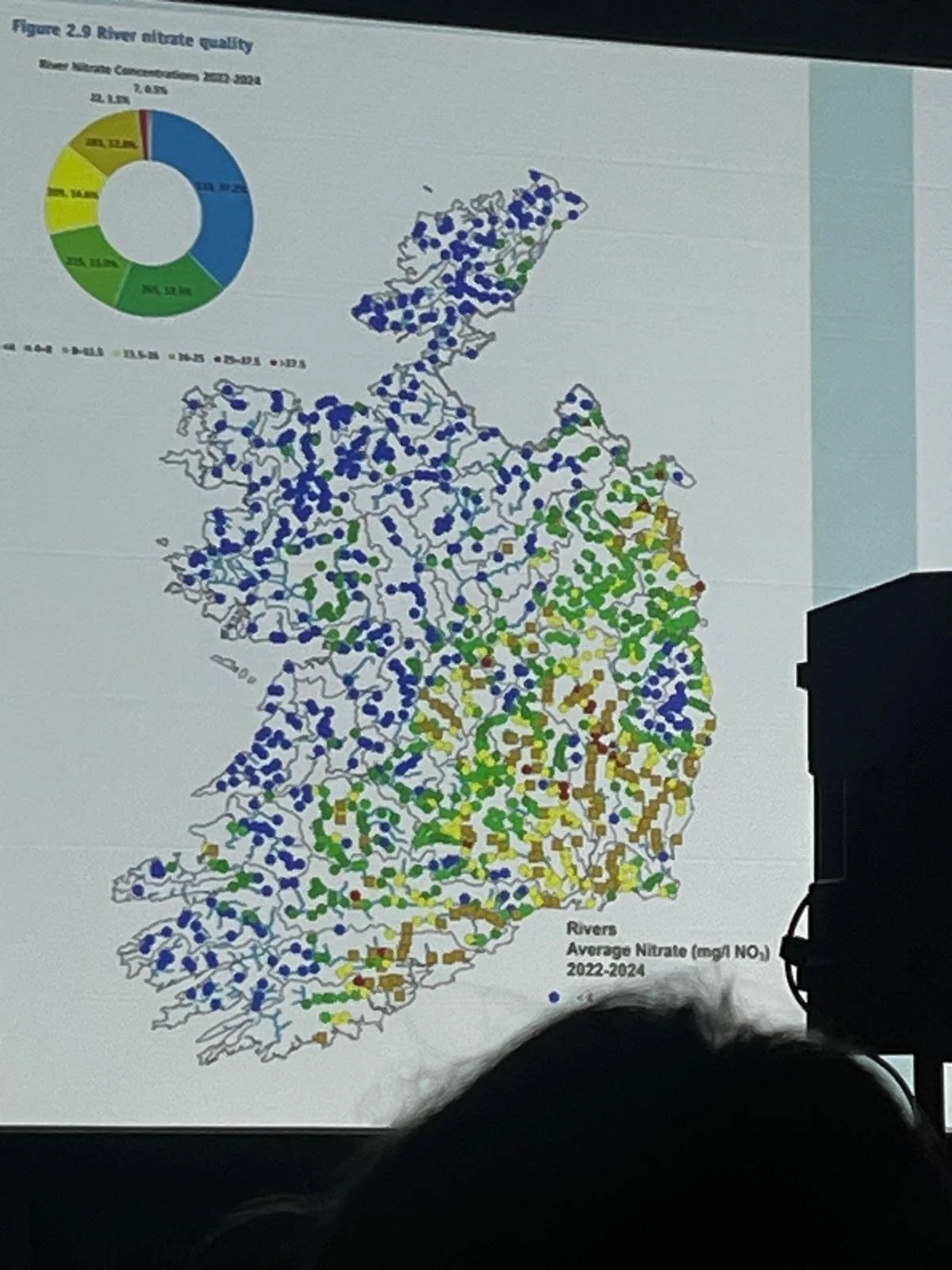
Nitrogen pollution is a particular concern in Kildare and other parts of the east and south-east of Ireland. In areas where soils drain freely, nitrogen can move down through the ground into groundwater and eventually reach rivers and streams. This makes the problem difficult to tackle, as pollution does not always arrive in a river through visible surface runoff. Different types of pollution need different solutions, and it is important to understand local conditions when deciding what measures will work.
You can here more about Elaine’s work in this great podcast Post Wild.
The importance of our own local stream
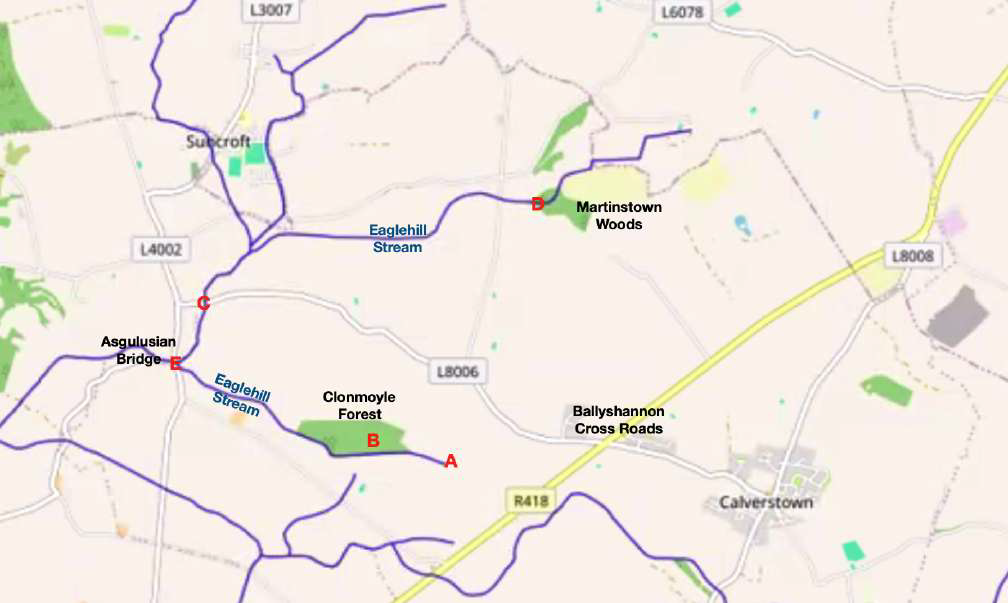
These issues are particularly relevant to our own area. The Eagle Hill/Tully Stream is a headwater of the River Barrow, which forms part of the River Barrow and River Nore Special Area of Conservation (SAC 002162). The Eagle Hill/Tully Stream may therefore be within the zone of influence of this protected area, meaning that changes affecting the stream could potentially have consequences further downstream. This is another reason to take the health of our local waterways seriously.
Inland Fisheries Ireland highlighted the importance of the local watercourse for wildlife in surveys carried out in 2021. Electrofishing surveys recorded large numbers of brown trout of different ages, along with good numbers of lamprey downstream of Asgulusian Bridge at Eagle Hill. Very large trout were also observed upstream. The watercourse was considered important as a spawning and nursery habitat for fish.
Our Community Biodiversity Action Plan also records the work of Dr Catherine O’Connell, who identified 59 species along the surveyed section of the stream: 39 plants, 15 insects and five birds. It is encouraging to see how much life can be found in a relatively small area, particularly one that many of us might pass without giving it much thought.
Another interesting detail in the plan was the presence of tufa deposits in the bed of the Eagle Hill/Tully Stream, particularly well developed in Clonmoyle Forest.
Tufa is a soft, often porous, limestone-like deposit that forms when water containing dissolved calcium carbonate releases some of this mineral, which gradually builds up around stones, plants and mosses. Given the right conditions, these deposits can develop over time and create distinctive natural features in a stream.
Tufa-forming areas can also support specialised habitats and plant communities, some of which are important for conservation. Their presence is another reason to take an interest in the natural features of our local streams and woodlands. There is often much more happening in these places than we might first realise.
All of this is a reminder that even a small or relatively overlooked stream can support a surprising amount of wildlife. Our local waterways are worth understanding and protecting, not only for the wildlife they support today but also for future generations.
Through our Community Biodiversity Action Plan, we are exploring practical ways to learn more about the Eagle Hill/Tully Stream, monitor its health and identify opportunities to improve it. We also want to encourage greater awareness of its importance to the surrounding landscape and the wildlife that depends on it.
Elaine's presentation was a reminder that local action matters enormously, but it must go hand in hand with wider changes if our rivers are to have a real chance of recovering.
Making space for nature in our schools
There was also an inspiring presentation from Clare Patten, Senior Biodiversity Coordinator with Green-Schools, who was joined by student representatives from St. Colmcille’s National School in Moone.
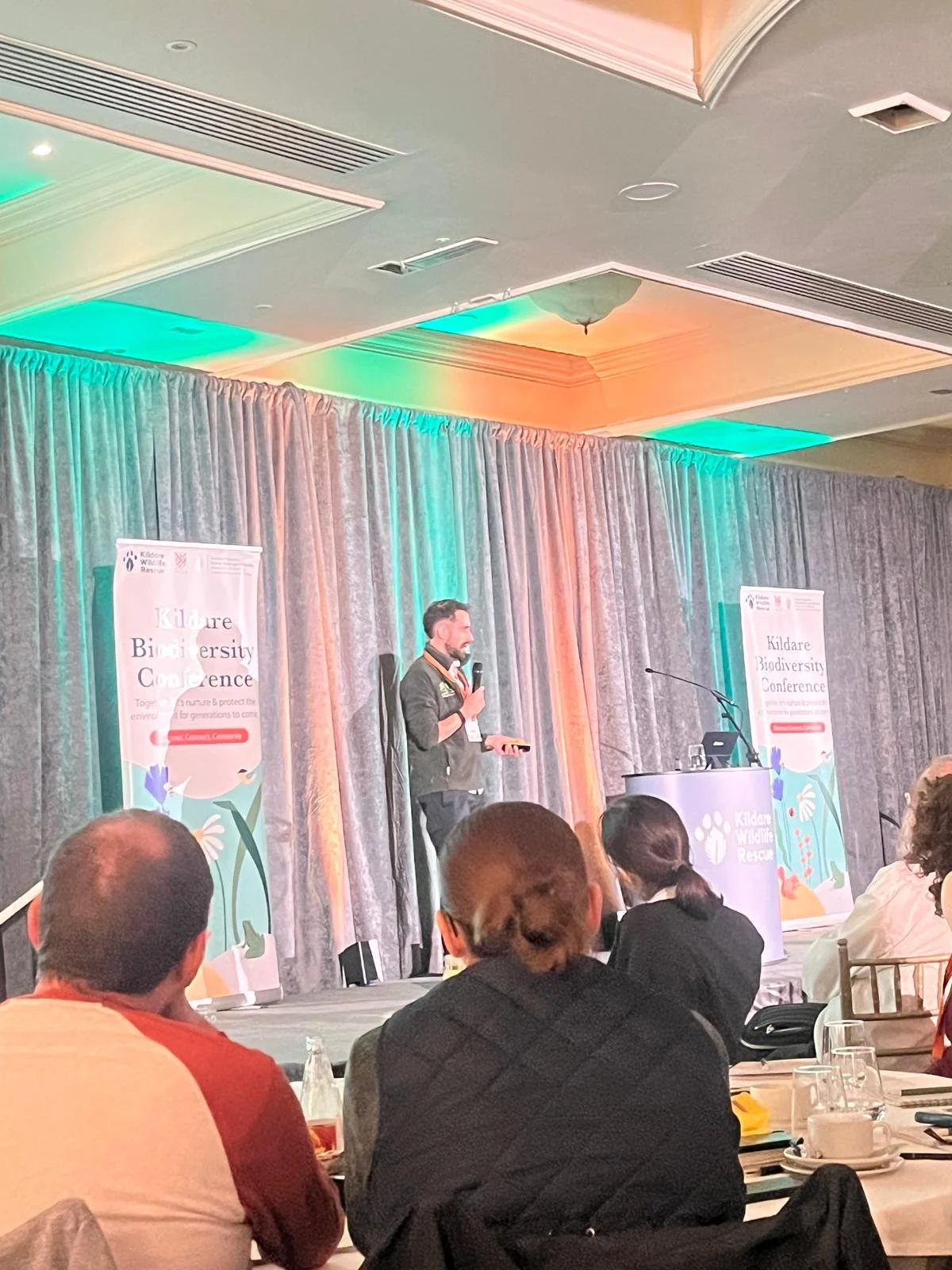
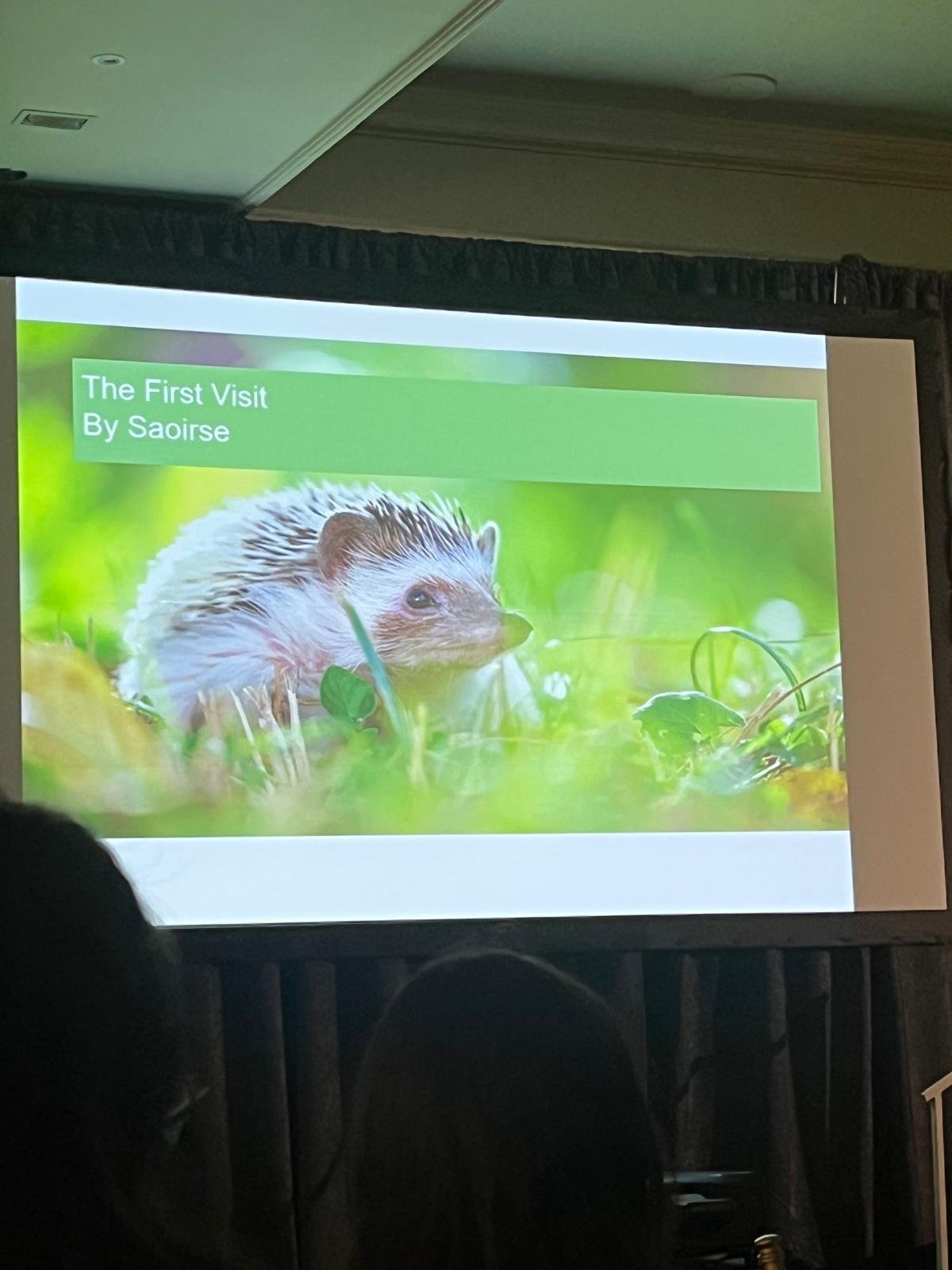
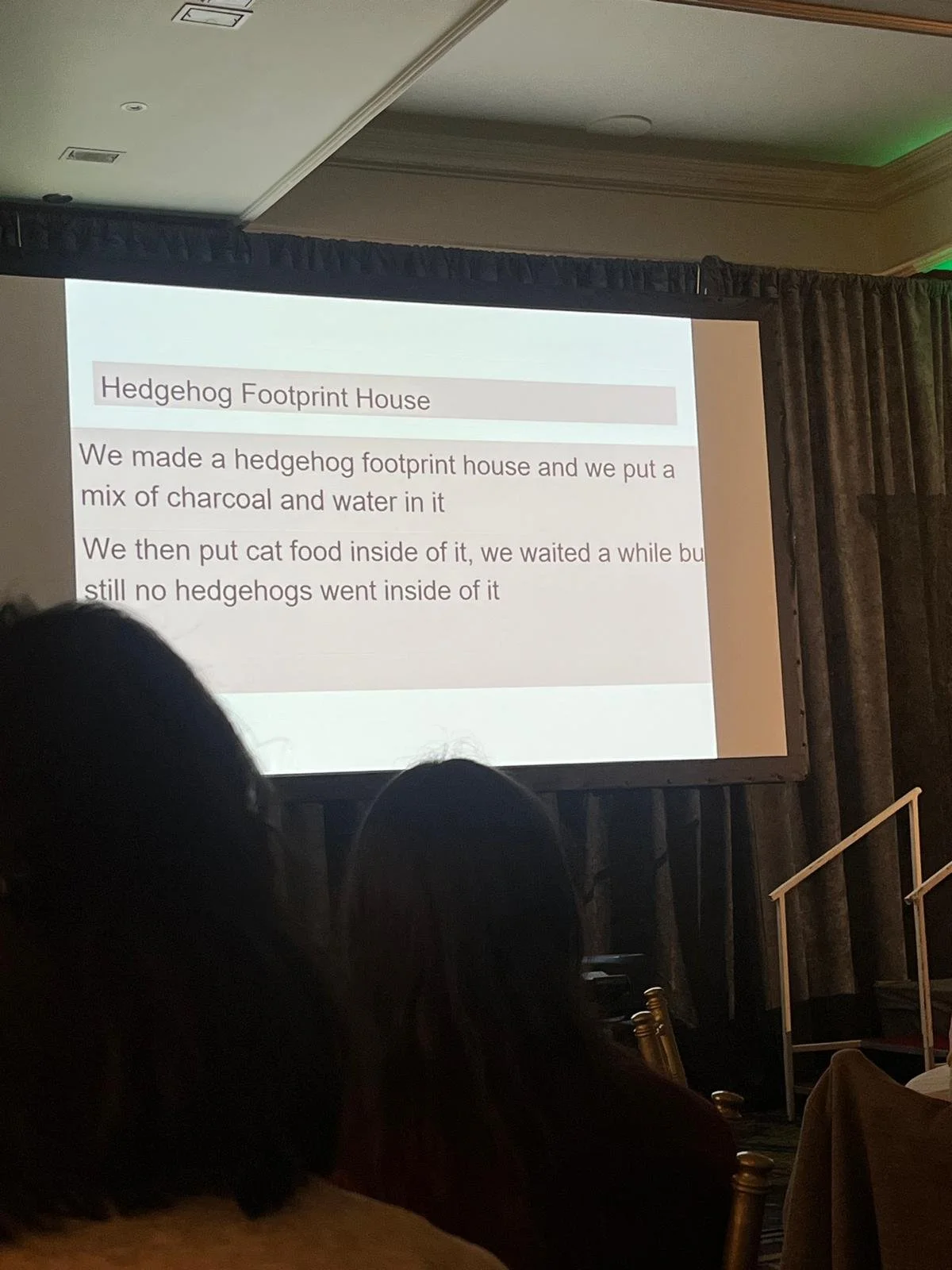
Their talk, “reWild for Hedgehogs – Let’s Invest in Nature in Schools”, showed how schools can make a real difference to local wildlife.
Clare spoke about the work Green-Schools does to help schools make their grounds more wildlife-friendly and encourage children to develop a connection with nature. The students from St. Colmcille’s shared their work to make their school more hedgehog-friendly, including planting trees, monitoring wildlife and creating a school garden where everyone can get involved.
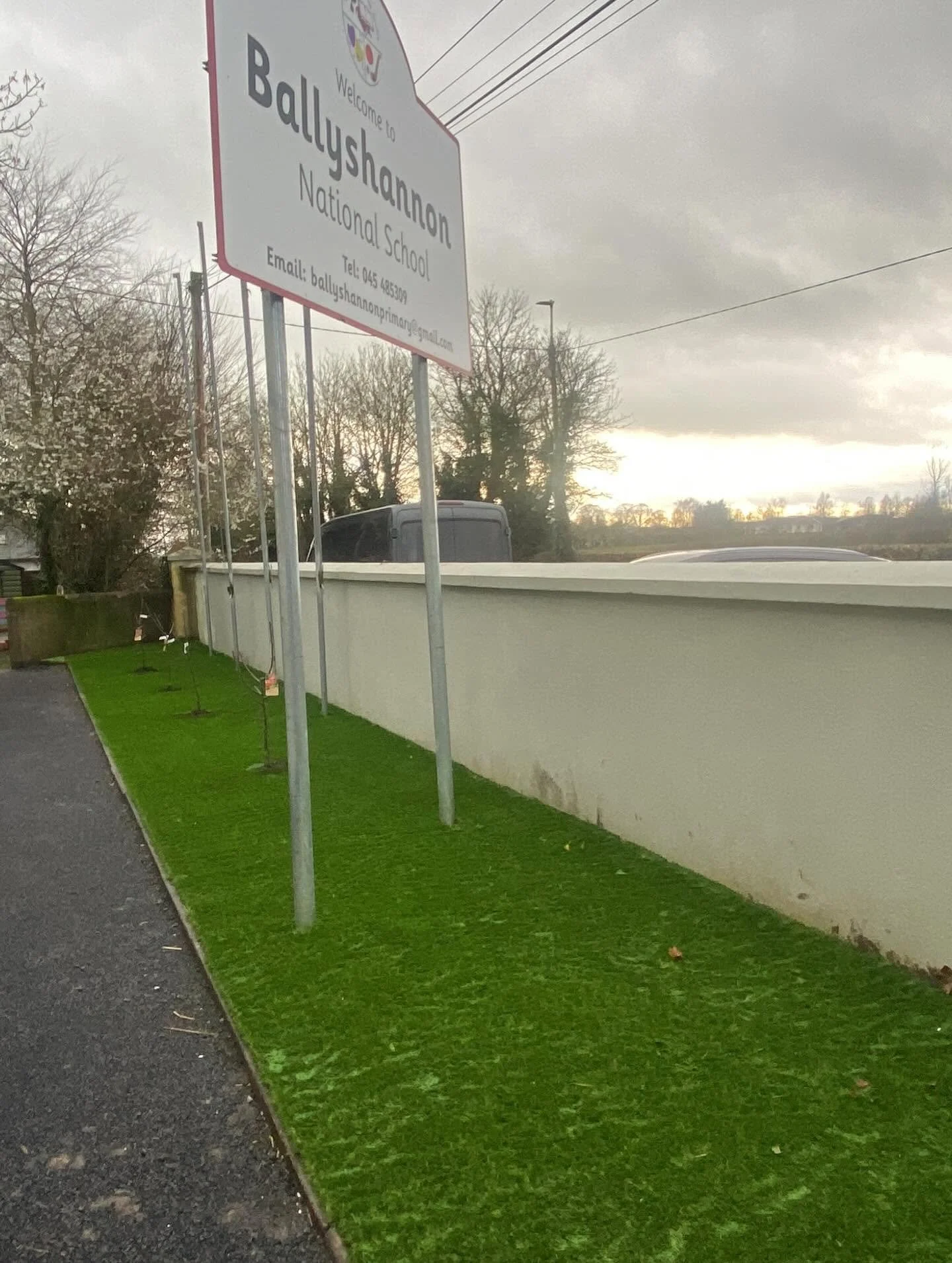
Apple Grove planted in Ballyshannon N.S. in Spring 2026, as part of our Community Biodiversity Action Plan implementation, with support from Community Foundation Ireland.
I enjoyed hearing about this kind of practical work. It is one thing to learn about biodiversity in a classroom, but it is quite another to get outside, plant a tree, look for wildlife and see how a space changes over time. These experiences can help children develop an appreciation for nature that stays with them as they grow up.
Butterflies, Asian hornets and deer
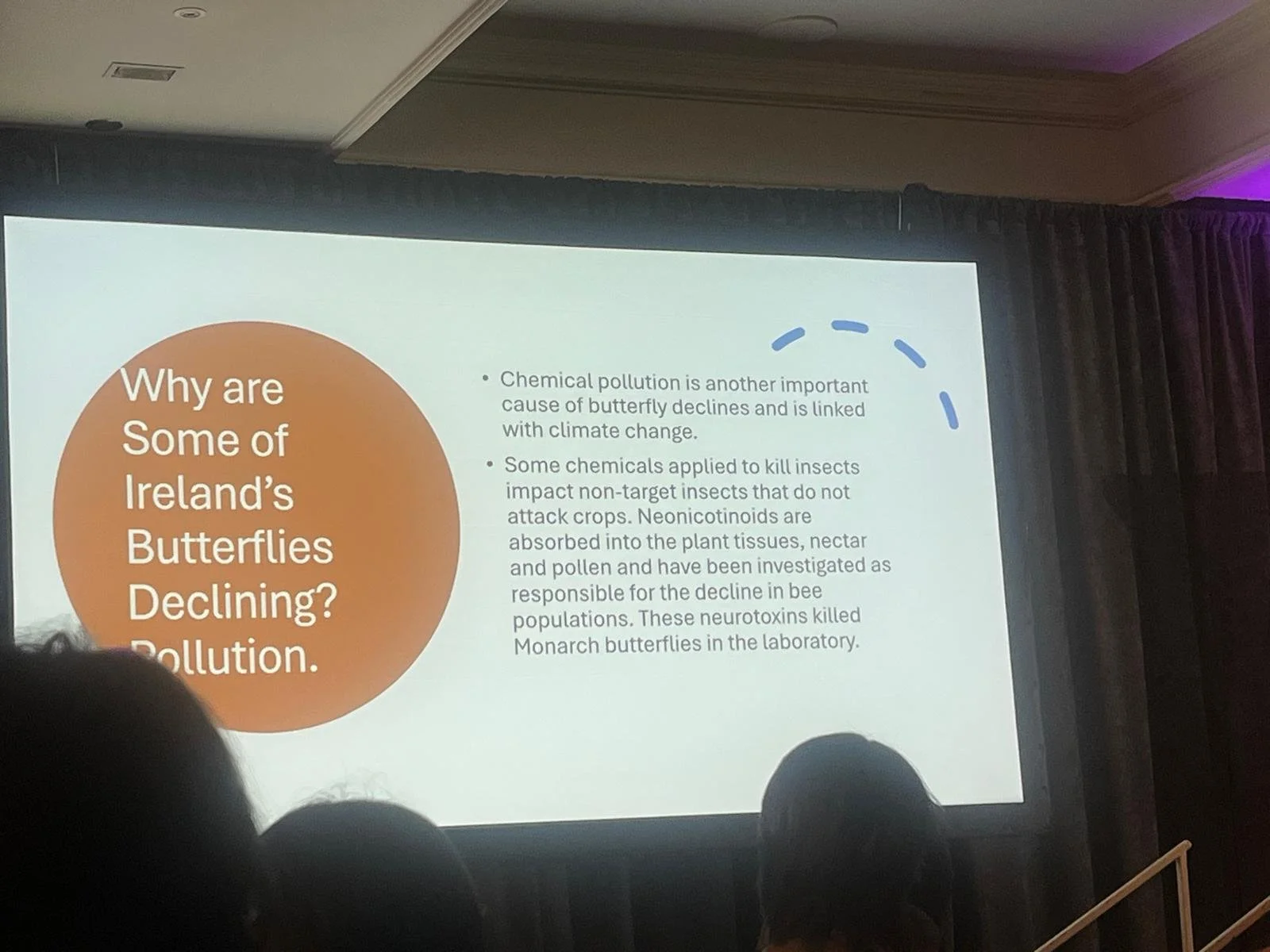
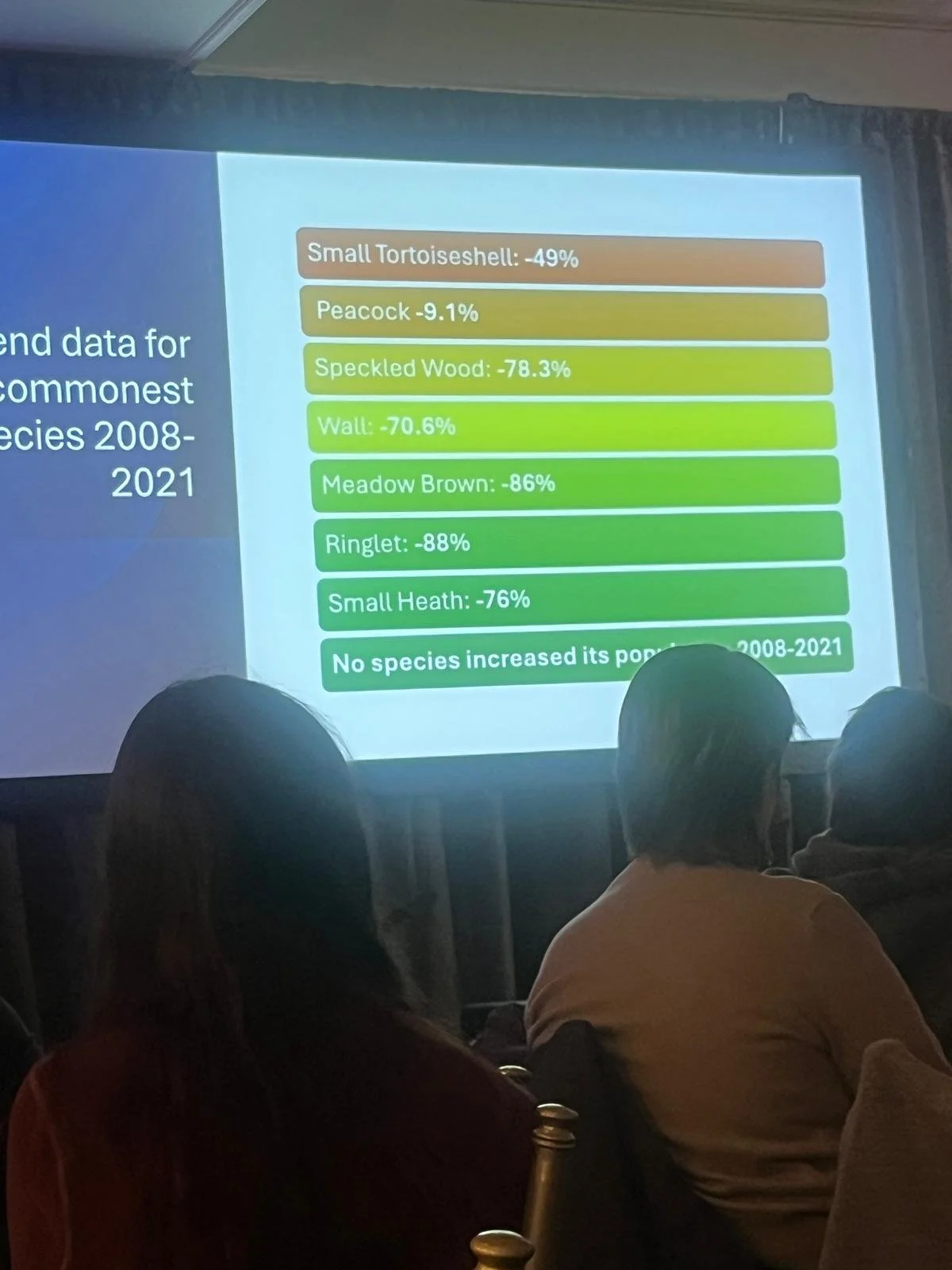
We also heard from Jesmond Harding, butterfly expert, who spoke about the worrying decline in many of our butterfly species. Among the issues raised were nitrate pollution and the lack of variety in grassland habitats.
Butterflies are something many of us enjoy seeing in our gardens, along hedgerows and on walks, but their numbers can tell us much more than whether we have had a good summer. Their decline can be a warning that something is wrong with the wider environment. Butterflies need suitable plants to feed on and places where they can breed and shelter. When grasslands lack variety and pollution affects their habitats, butterflies and other insects can struggle to survive.
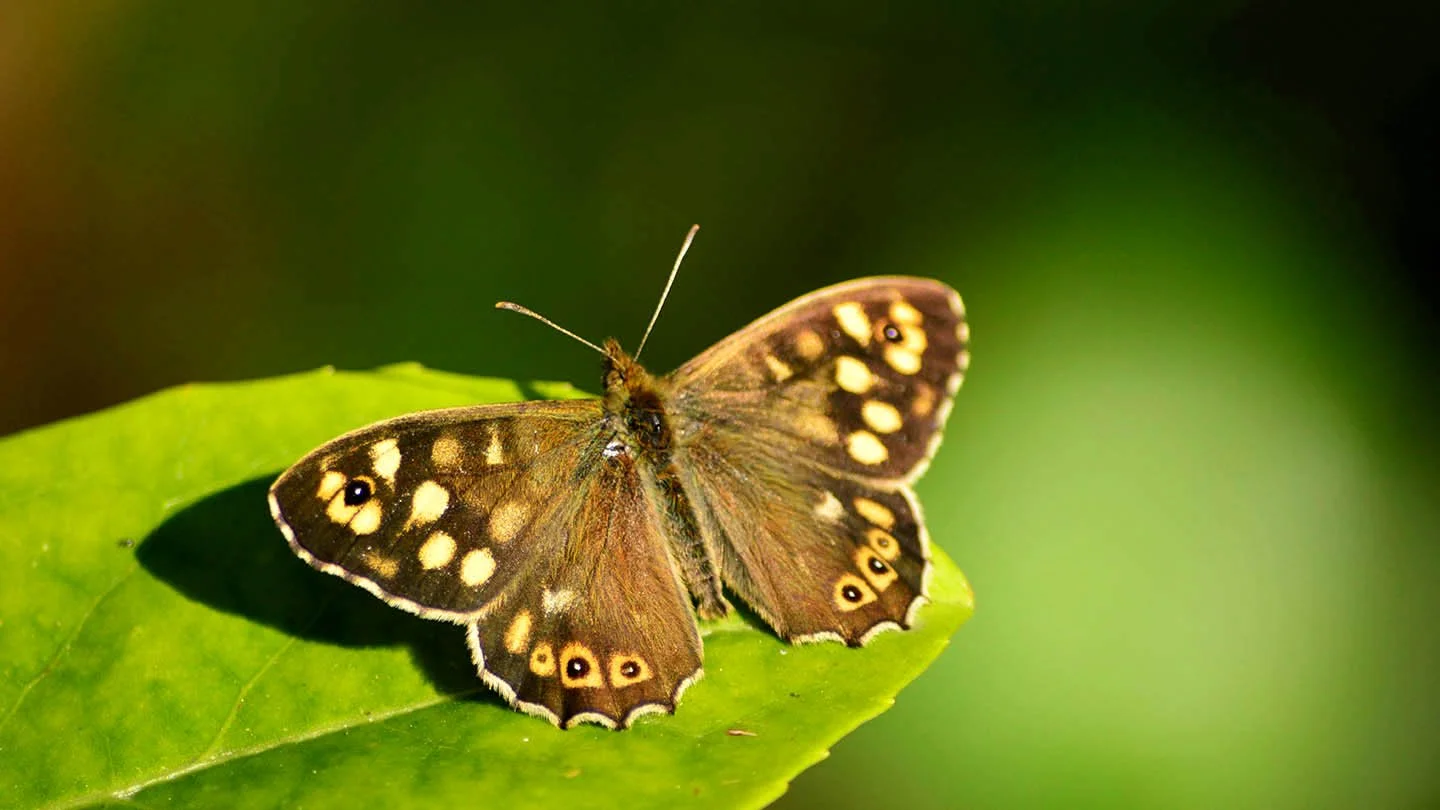
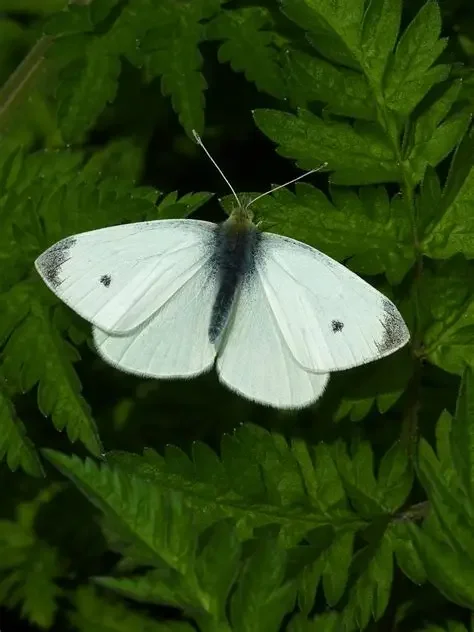
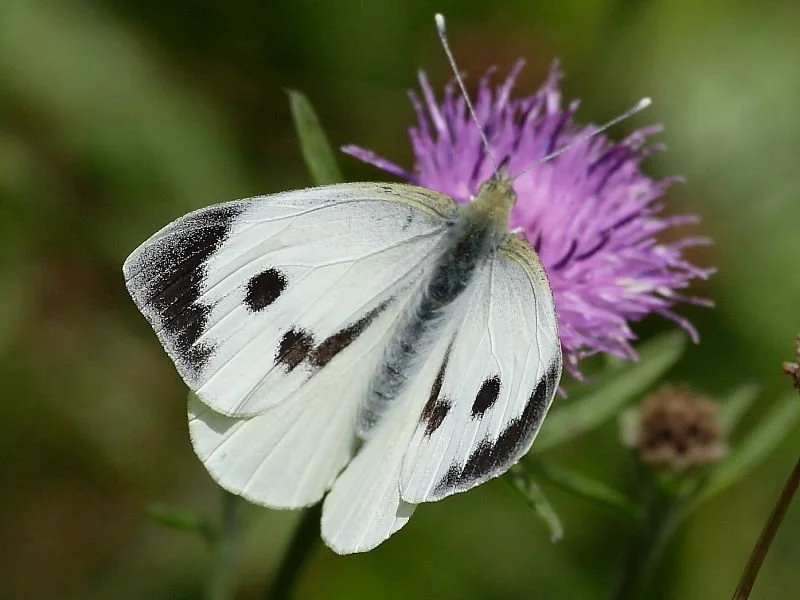
It was particularly interesting to hear Jesmond speak about the pressures facing butterflies, knowing that we have been recording them in our own area. During a day spent surveying our hedgerows for the Community Biodiversity Action Plan, three butterfly species were recorded: the Speckled Wood, Small White and Large White. These sightings give us a snapshot of the wildlife living in and around our local hedgerows. They are not just boundaries between fields or along roads; they are living habitats that provide food, shelter and connections between different areas of the countryside.
Caroline McDonald, Education Officer with the Irish Beekeepers Association, spoke about the concern surrounding Asian hornets and the work involved in locating and destroying their nests. It was interesting to hear about the techniques used to track them down and the monitoring needed to help prevent these invasive insects from becoming established.
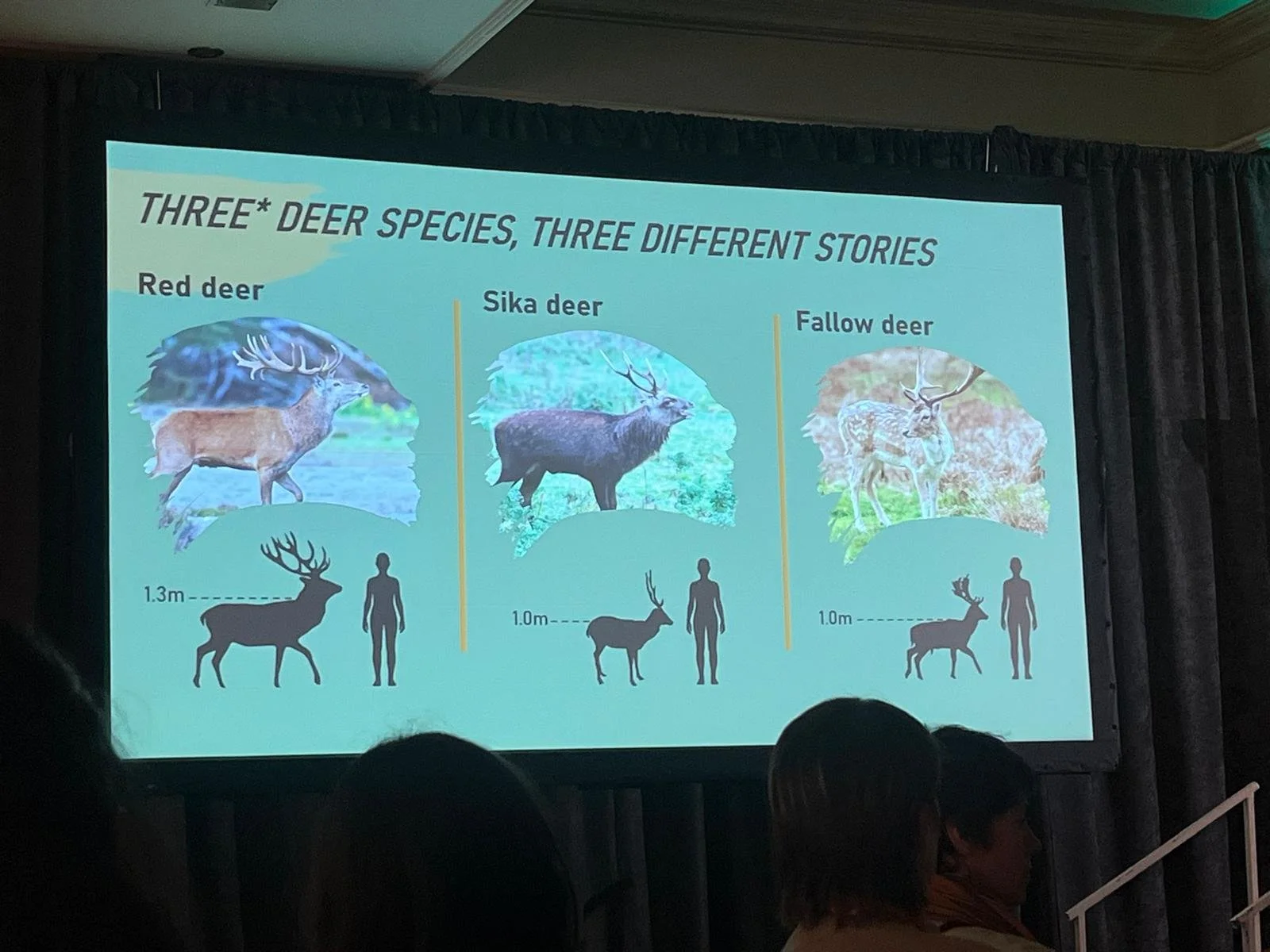
Dr Adam F. Smith spoke about deer management and how deer populations are being monitored in Wicklow and beyond. Deer are part of our natural environment, but their numbers and the way they use the landscape can affect woodland regeneration and other habitats. Monitoring helps build a clearer picture of what is happening and supports informed decisions about how best to manage their impact.
What can we do?
One of the things I took away from the conference was just how connected these issues are. The health of our rivers, the survival of butterflies, the protection of hedgerows and the management of wildlife are all part of the same bigger picture.
It can sometimes feel as though the problems facing nature are too big for one person or one community to make a difference. There are certainly issues that need to be addressed through government policy and changes to how land is managed. But local communities also have a role to play by learning more about the wildlife around them, looking after local habitats and asking questions about what is happening to the natural places we value.

For us, Ballyshannon is a good place to start. By getting to know it better, understanding the wildlife it supports and working together to protect it, we can hopefully make a positive difference. Protecting nature does not always begin with a large project or a major initiative. Sometimes it starts with just paying attention to the hedgerow beside a road, the butterflies in a field or the stream running through our community.
The conference was a reminder that there is much to learn about the natural world around us, but also that we do not have to be experts to care about it or to take steps to protect it.
Kinder than Man
Althea Davis
And God
please let the deer
on the highway
get some kind of heaven.
Something with tall soft grass
and sweet reunion.
Let the moths in porch lights
go someplace
with a thousand suns,
that taste like sugar
and get swallowed whole.
May the mice
in oil and glue
have forever dry, warm fur
and full bellies.
If I am killed
for simply living,
let death be kinder
than man.
